
The United States says it has invested $1.2m over the past five years to support cultural heritage preservation across 21 Nigerian states, describing the initiative as a strategic investment that advances the interests of both Nigeria and the US.
Speaking at the unveiling of a cultural heritage preservation project by the Wheyham Foundation in Abuja on Tuesday, the Charge d’Affaires of the U.S. Embassy, Keith Heffern, said the investment was made primarily through the Ambassadors Fund for Cultural Preservation.
Heffern said the latest project demonstrated the impact of American technology and partnerships in preserving Nigeria’s cultural heritage while tackling the illicit trafficking of cultural artefacts.
“Over the past five years alone, the United States has invested $1.2m for cultural heritage work primarily as part of the Ambassadors Fund for Cultural Preservation across 21 Nigerian states, not as aid, but as a strategic investment that advances American interests alongside Nigeria’s,” he said.
According to him, the project has digitally preserved more than 250 Nok artefacts, upgraded a museum, trained 50 Nigerian youths in advanced digital skills and reached over 50,000 people nationwide.
“The results speak for themselves: over 250 Nok artefacts digitally preserved, a fully upgraded museum, 50 Nigerian youth trained in cutting-edge digital skills, and 50,000 people reached nationwide.
“Built predominantly with American technology, this platform delivers real investment, measurable results, and lasting impact. This is what American cultural heritage partnership looks like,” he said.
Heffern added that the platform incorporates Non-Fungible Token-based artefact tracking technology to combat the illicit trafficking of cultural property and strengthen security cooperation between both countries.
“This system also features Non-Fungible Token, or NFT, based artefact tracking, a digital shield protecting Nigerian heritage from a multi-billion-dollar trafficking industry, while strengthening law enforcement cooperation that protects both our nations’ security.
“American technology isn’t just preserving culture—it’s disrupting the criminal networks that threaten us both.
“A strong, secure Nigeria is good for America. When Nigeria’s heritage is protected, criminal networks are disrupted and the foundation for prosperity, for both our nations, is secured.”
The Minister of Art, Culture, Tourism and the Creative Economy, Hannatu Musawa, said the unveiling of the immersive digital Nok heritage experience marked the delivery of a key component of a cultural preservation agreement signed between Nigeria and the United States in 2025.
She recalled signing a grant agreement with the U.S. Embassy under the Ambassadors Fund for Cultural Preservation to document and protect the Nok terracotta artefacts of Kaduna State.
“In February last year, in Abuja, I signed a grant agreement between this ministry and the United States Embassy, under the Ambassadors Fund for Cultural Preservation, to document and protect the Nok terracotta artefacts of Kaduna State. What we see this morning is a component of that project delivered,” she said.
Musawa described the Nok civilisation as one of Africa’s earliest centres of artistic excellence, noting that its terracotta works predate the Common Era by centuries.
“The Nok civilisation produced some of the earliest and most technically accomplished terracotta art known on this continent.
For too long that history has lived mainly in museum collections and academic papers. What the Wheyham Foundation, the NCMM and Yale University have built together changes that,” she added.
The minister said digital preservation complements, rather than replaces, the physical protection of cultural heritage by making Nigeria’s history accessible to a wider audience.
“This is what digital preservation means to this ministry. It does not replace the physical work of guarding a site or conserving an object.
“It makes sure that work reaches people who will never visit Kaduna State, and that the record survives even where the objects themselves are at risk,” she added.
The minister said the approach would be extended to other tangible and intangible cultural heritage sites across the country.
She also acknowledged more than two decades of U.S. support for preserving Nigeria’s cultural heritage.
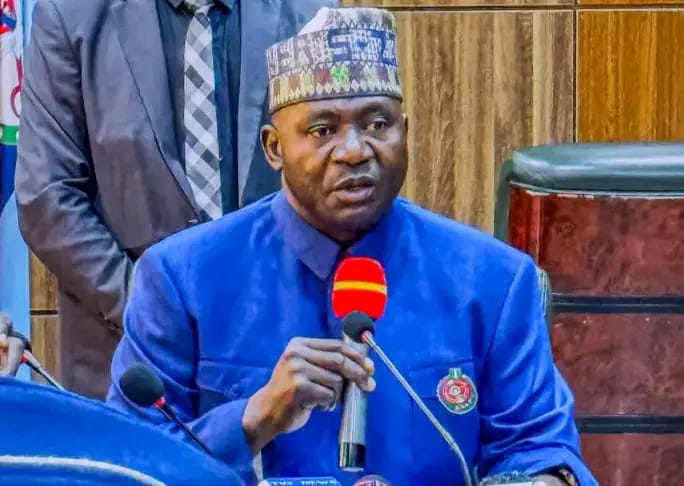
The Minister of Defence, Gen Christopher Musa (retd.), said preserving Nigeria’s cultural heritage is essential to strengthening national security, unity and identity, stressing that security extends beyond military capabilities.
“As Minister of Defence, my primary responsibility is to help safeguard our nation’s sovereignty, our territorial integrity and the security of our people.
“But over the years, I have come to appreciate that national security is about much more than military strength alone.
“A secure nation is also one whose people understand who they are, where they come from and what they stand for.
“Our history, our culture and our shared heritage strengthen national identity, build confidence in our people, foster unity across our diversity and reinforce the values that hold our nation together,” he said.
Musa, who hails from Zangon Kataf in Southern Kaduna, described the Nok civilisation as a shared national heritage and urged greater efforts to protect Nigeria’s cultural treasures from theft, illicit trafficking, vandalism and neglect.
Both ministers commended the Wheyham Foundation, the U.S. Embassy, Yale University and the National Commission for Museums and Monuments for using documentary filmmaking and digital technology to make the Nok civilisation more accessible to young Nigerians and global audiences.
Meanwhile, the Wheyham Foundation commissioned the Wheyham Project, a technology-driven heritage initiative that has digitally catalogued more than 250 Nok artefacts, refurbished the Nok Museum and introduced immersive virtual and augmented reality experiences to preserve and promote Nigeria’s ancient civilisation.
Speaking at the ceremony, the Chairman of the Wheyham Foundation, Yahaya Maikori, said the project combines traditional conservation with modern digital technology to improve heritage preservation, expand public access and promote cultural tourism.
He added that the initiative has introduced digital artefact-tracking systems, attracted more than 50,000 visitors through cultural exhibitions, trained hundreds of young Nigerians and community members in heritage preservation and digital documentation, and laid the foundation for expanding digital preservation and museum modernisation across the country.
By: Deborah Musa