
By Justice Okamgba
Nigeria’s growing stablecoin market is attracting further expansion from Bitget Wallet, as the self-custodial crypto wallet deepens its direct bank transfer services for users seeking to convert dollar-denominated digital assets into naira.
A statement from the firm stated that the company has operated a direct bank transfer feature in Nigeria since November 2025, allowing users to convert USDT or USDC held in the wallet directly into naira deposited into a Nigerian bank account without first transferring the assets to a separate exchange.
Nigeria has become the centre of gravity for stablecoin activity in sub-Saharan Africa. The IMF estimates that the country accounts for roughly 60 per cent of the region’s inflows, a figure built from third-party blockchain data using USDT and USDC as proxies rather than an official balance of payments measure.
Formal remittance data has also increased. Inflows through licensed money transfer operators reached $1.29bn in the first quarter of 2026, up 45 per cent year on year.
CBN Governor Olayemi Cardoso has said the bank is targeting $1bn a month by year-end, from a run rate of above $600m. Total remittances over the same quarter fell to $5.30bn from $5.72bn, suggesting that the growth is within the formal channel rather than in the overall pool.
Against this backdrop, Bitget Wallet launched its direct bank transfer service in Nigeria and Mexico on November 25, 2025, covering more than 45 Nigerian banks and over 35 Mexican banks.
The service supports USDT and USDC on BNB Chain, Ethereum, Solana, Tron, and Base and was launched with zero fees. At the time of the launch, Nigeria’s annual on-chain transaction value was estimated at $90bn.
“Bitget Wallet has since expanded its global user base, surpassing 100 million users by July 2026, up from 80 million at the November launch. Payment volume also overtook trading volume for the first time, while the company reported $177bn in stablecoin settlement across more than 80 rails and 100 currencies.
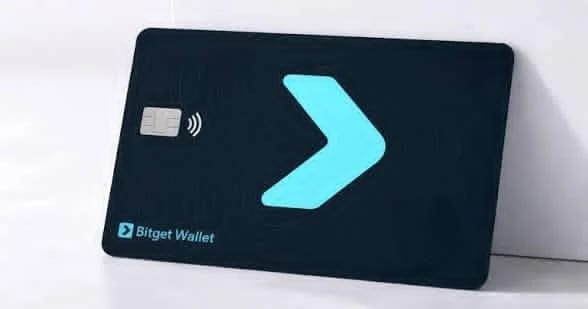
“The company has also issued more than 150,000 cards across more than 50 markets. Card spending in the first half of 2026 was reported at $33m, representing a 191 per cent increase from the second half of 2025,” it stated in the statement.
In emerging markets, card spending grew by 416 per cent. The company said the average cardholder makes 10 payments a month at about $28 per transaction.
For Nigerians holding dollar-denominated stablecoins, acquiring the assets has rarely been the difficult part. The challenge has been converting a USDT or USDC balance into naira in a bank account without multiple intermediaries taking a cut at every stage.
The conventional route involves sending the stablecoin to an exchange, selling it, and withdrawing the naira to a bank account. Each stage carries a fee, a waiting period, and a potential point of failure. The direct transfer compresses the process into a single action within the app.
Bitget Wallet has not published the full mechanics of the off-ramp infrastructure. The process requires a counterparty with sufficient naira reserves to swap for the holder’s assets at a specific price.
The partner must then push the local currency through Nigerian settlement systems into the recipient’s bank account. The application manages the trade by securing liquidity, setting the conversion rate, and triggering the final movement of funds.
Performance depends on liquidity depth, the tightness of the spread against market benchmarks, and settlement consistency during periods of local network congestion. Because Bitget Wallet is self-custodial, the balance remains under the user’s own keys until conversion, and the company does not hold customer funds on its own books.
The firm noted that the service is particularly relevant to users who already hold stablecoins earned through freelance income, invoices paid by overseas clients, or revenue from cross-border contracts.
“Traditional remittance platforms prioritise the liquidity needs of those outside the country looking in. A user in Toronto or London initiates the flow by funding their digital wallet with local fiat, targeting a specific recipient in Lagos. In this model, the transaction originates in a foreign market, and the sender serves as the primary customer.
“The direct bank transfer begins with a stablecoin balance the user already holds. A holder therefore wants control over when and how much of the asset becomes naira. The corridor has also seen significant repricing, with London-to-Lagos transfer costs falling from an average of 7.8 per cent in 2023 to between 2 and 3 per cent on modern diaspora applications.
The wider market trend is also reflected in the use of stablecoins for cross-border transactions. When a freelancer in Lagos is paid in USDT by a client in Berlin and converts it to naira inside a wallet, no money transfer operator touches the transaction, and it appears nowhere in the quarterly inflows the CBN reports.
“Bitget Wallet’s expansion therefore comes as stablecoins gain a larger role in Nigeria’s digital payments and cross-border transaction market,” it stated.