

By Emmanuel Ndon
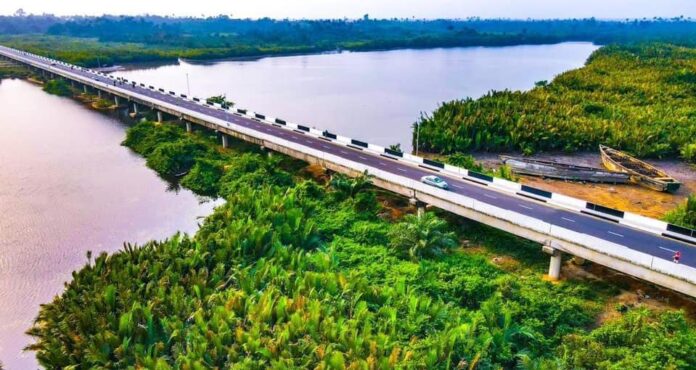
The construction of 40 bridges strategically located across Akwa Ibom State by Governor Umo Eno represents a major push to improve connectivity and eliminate long-standing geographical barriers.
The projects form part of a wider infrastructure programme that includes extensive road construction and rehabilitation across the state. Designed to link riverine and inland communities, the bridges are engineered to withstand challenging environmental conditions while providing permanent access routes for movement and trade.
Each bridge is built with resilient engineering systems suited for high-moisture and flood-prone environments. Elevated decks, deep foundation works and durable materials ensure stability and long service life. Safety and usability features such as pedestrian walkways and lighting systems are integrated to improve both vehicular and human access, particularly during low-visibility conditions.
For communities in riverine and hard-to-reach areas, the bridges significantly reduce isolation. Residents who previously relied on seasonal ferry crossings or risky water transport now enjoy year-round access to schools, healthcare facilities and markets. This improves safety, reduces travel time and lowers transportation costs for households and traders.
The implementation reflects coordinated infrastructure planning across multiple local government areas. Bridge construction is aligned with road networks to ensure continuity of movement. This integrated approach strengthens regional mobility and supports economic activity across sectors.
Economic activity has expanded around bridge corridors. Improved access allows farmers and traders to move goods more reliably, reducing post-harvest losses and increasing market participation. Local labour involvement during construction has also provided temporary employment, while improved connectivity supports longer-term commercial growth in surrounding communities.
Communities along the bridge routes are experiencing gradual transformation. Increased accessibility encourages the growth of local markets, improves school attendance in remote areas and strengthens access to healthcare services. Over time, these changes contribute to more stable settlement patterns and reduced rural isolation.
At the state level, improved connectivity enhances trade efficiency and strengthens internal integration. Reduced travel constraints lower logistics costs, enabling more competitive pricing for goods and improving access to wider markets. This supports both agricultural productivity and small-scale enterprise development.
The bridges also improve emergency response capabilities. Shorter travel routes enable faster movement for ambulances, security services and disaster response teams, particularly during flooding seasons when alternative routes are limited. This strengthens overall public safety and service delivery.
Environmental and engineering considerations are central to the design. Elevated structures reduce flood impact, while drainage and erosion control measures protect surrounding ecosystems. Materials and construction methods are selected to ensure durability in coastal and riverine conditions.
As part of the broader infrastructure programme, the bridges complement road construction and rural development initiatives. Together, they form a connected network that supports movement, commerce and public service delivery in all parts of the state.
Ultimately, Governor Umo Eno’s 40 bridges initiative stands as a comprehensive effort to improve connectivity and reduce geographic disadvantage. By linking communities more effectively, the project strengthens economic activity, improves access to essential services and supports long-term development in Akwa Ibom State.