
By Ekaette Okon Joseph Thompson
Across Africa, millions of young girls still struggle with poor menstrual hygiene due to poverty, lack of awareness, and limited access to sanitary products. UNICEF reports that many girls miss school during their menstrual periods because they cannot afford sanitary pads or access proper hygiene facilities, exposing them to infections, emotional trauma, and low self-esteem.
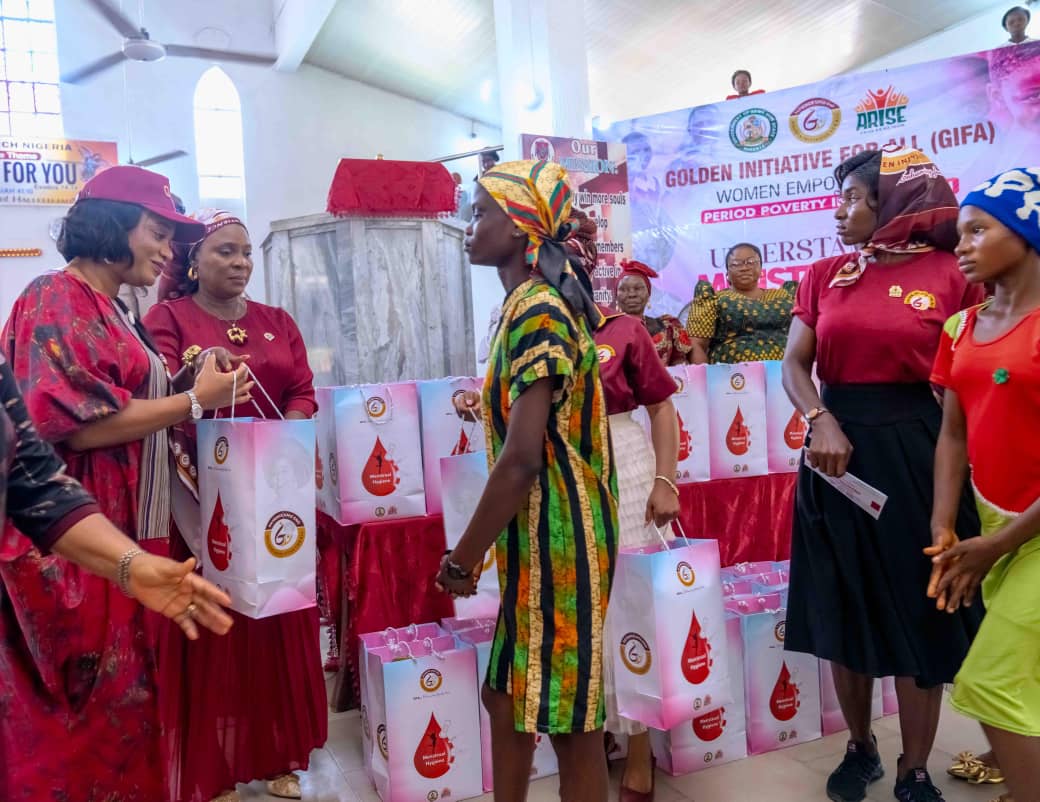
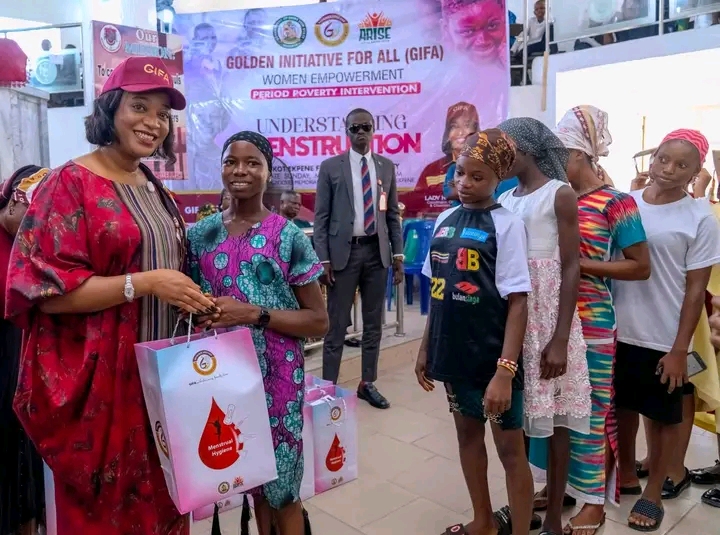
Inside the Grooves Memorial Methodist Church, Ikot Ekpene, the atmosphere was filled with excitement, curiosity, and relief as over 500 secondary school girls gathered for a menstrual hygiene awareness programme organised by the Patience Umo Eno Golden Initiative For All, GIFA.
For many of the girls drawn from Ikot Ekpene, Obot Akara, and Essien Udim Local Government Areas, it was more than a health outreach. It was an opportunity to learn openly about menstruation without shame or fear.
The programme, tagged “Understanding Menstruation,” focused on educating adolescent girls on menstrual hygiene, reproductive health, personal care, and self-confidence, while also providing sanitary materials and hygiene products to participants.
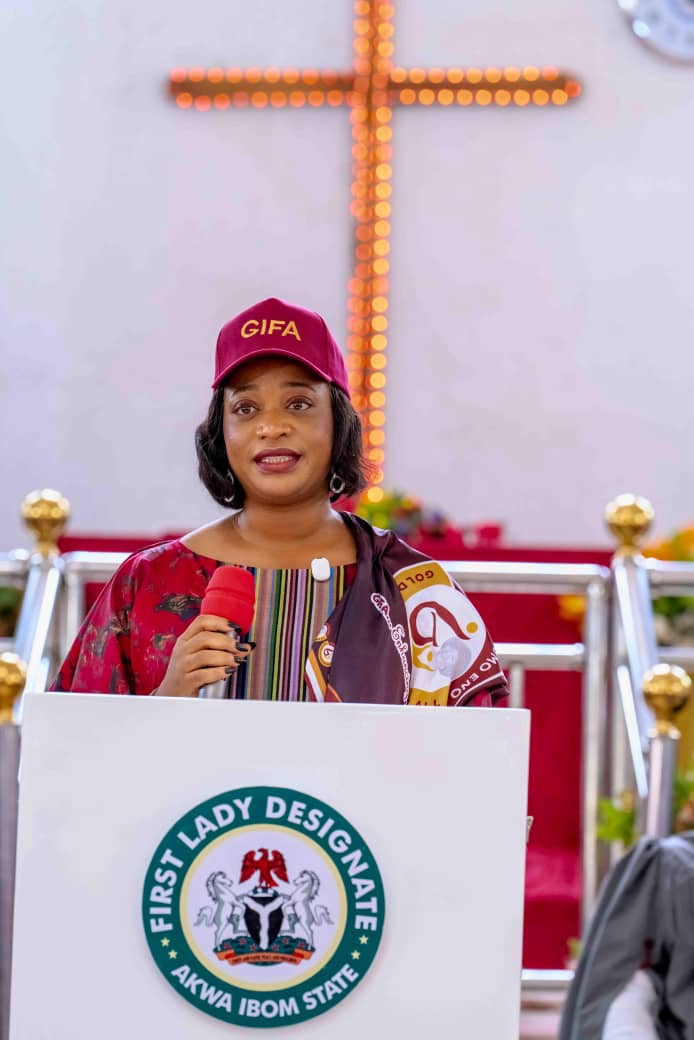
Addressing the gathering, the Coordinator of the Office of the First Lady, Akwa Ibom State, and Chairman of the Board of Trustees of GIFA, Lady Helen Eno Obareki, said menstruation should never become a source of embarrassment or limitation to any girl.
She described period poverty as a silent challenge affecting the education and confidence of many young girls, especially those from low-income families.
Lady Obareki encouraged the girls to speak freely about menstrual health issues and seek proper guidance whenever necessary.
No girl should have to miss school, feel ashamed, or be held back simply because of her period,” she said.
She stressed that beyond distributing sanitary materials, the initiative was aimed at equipping girls with the right knowledge to stay healthy and confident throughout their menstrual cycle.
According to health experts, poor menstrual hygiene can expose girls to infections and reproductive health complications, especially when unhygienic materials are used repeatedly during menstruation.
Many girls in rural communities still resort to old clothes, tissue paper, or other unsafe materials because sanitary pads remain unaffordable.
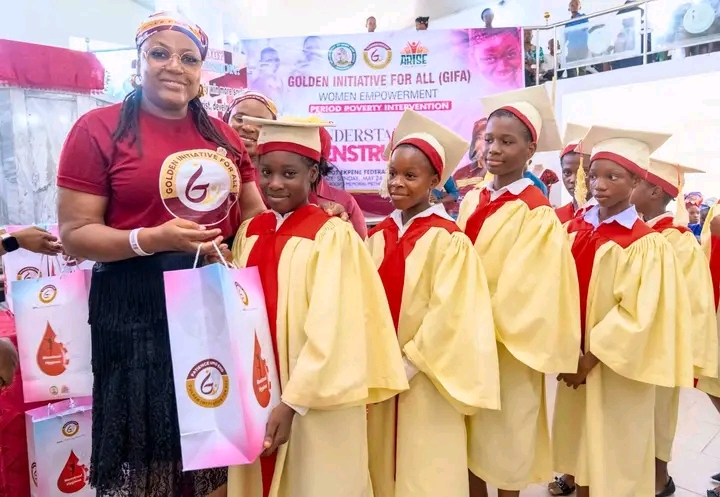
Medical doctor Esther Udoudom, who delivered a health talk during the programme, educated the participants on body changes during puberty, proper menstrual hygiene, and the correct use and disposal of sanitary pads.
Using practical demonstrations, she explained the importance of regular bathing, changing sanitary pads frequently, and maintaining personal hygiene during menstruation.
She also spoke on safe and unsafe touch, reproductive health awareness, and ways young girls can protect themselves from abuse and early pregnancies.
The session created an atmosphere where many girls felt comfortable asking questions that they would ordinarily avoid discussing publicly.
For Enoima Uko from Mbiabong Etoi, the intervention came as a relief.
She appreciated Governor Umo Eno and Lady Helen Obareki for remembering girls from poor backgrounds who often struggle to afford sanitary pads.
According to her, many young girls suffer in silence during their menstrual periods because their families cannot provide proper sanitary products.
She also thanked Governor Umo Eno for supporting young people through skills acquisition programmes and financial support initiatives across the state.
Another participant, Inemesit Okon, a postgraduate student of Agricultural Education at the University of Uyo, described the programme as timely and impactful.
She said many young girls lack proper knowledge about menstrual hygiene and personal care, making awareness campaigns extremely important.
Inemesit commended Lady Helen Obareki for her support of girls and women across Akwa Ibom State, noting that the knowledge gained during the programme would help many participants take better care of themselves.
The Methodist Archbishop of Ikot Ekpene Archdiocese, the Rev. Etim Ekong, also praised the initiative, describing it as a programme capable of restoring confidence and dignity to young girls.
He said the church was honoured to host an intervention focused on educating and empowering adolescents on responsible living and personal hygiene.The programme reflected growing efforts to address menstrual health challenges facing adolescent girls across developing communities.
For many of the girls who received sanitary packs and health education, the outreach represented more than charity.
It was a message that menstruation is not a burden or a source of shame, but a natural part of womanhood that should be managed with dignity, knowledge, and confidence.