

By Olasunkanmi Akinlotan
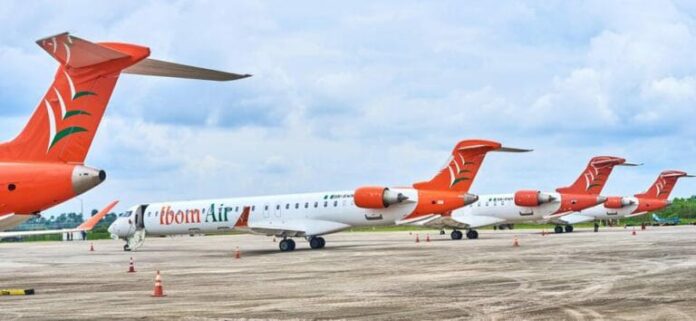
Ibom Air has rejected allegations that it operates a monopoly at Victor Attah International Airport, Uyo, or uses its position as the home-based carrier to prevent other airlines from operating from the Akwa Ibom airport.
The airline said it has neither the authority nor the regulatory power to determine which carriers can operate from Uyo or any other airport in Nigeria.
The clarification comes amid public debate over the airline’s dominant presence at the airport, with some travellers and industry observers questioning whether limited competition could be contributing to higher fares and fewer flight options for passengers.
Ibom Air, in a statement on Monday, however, said the power to authorise, regulate, suspend or otherwise permit airline operations rests with the relevant aviation authorities.
It cited Section 8(3) of the Civil Aviation Act 2022, which gives the Nigeria Civil Aviation Authority responsibility for regulating civil aviation in the country.
The airline said where a carrier satisfies applicable regulatory and operational requirements and secures the necessary approvals, “another airline cannot simply be prevented from operating by Ibom Air.”
It also stressed the need to distinguish between an airline changing its own operations and preventing a competitor from operating.
According to the carrier, it has itself suspended flights to destinations including Enugu and Calabar at different times to accommodate mandatory aircraft maintenance and other operational requirements.
“Such decisions are internal operational decisions and should not be interpreted as an attempt to create or maintain a monopoly,” the airline stated.
It added that factors such as aircraft availability, fuel logistics, airport infrastructure, flight scheduling and regulatory requirements could affect the frequency or number of flights from an airport without necessarily indicating that one airline controls access.
Ibom Air said it would welcome increased competition, noting that more airlines operating in Uyo could strengthen the airport and deliver greater benefits to passengers.
“Ibom Air welcomes competition. On the contrary, we believe a healthy, competitive aviation environment ultimately benefits passengers,” it said.
The airline identified increased travel options, wider choices of schedules and fares, improved connectivity for Akwa Ibom and the South-South region, increased passenger traffic and a stronger aviation ecosystem as potential benefits of having more carriers at the airport.
Ibom Air said its position as the home-based carrier should not be confused with ownership or control of the airport.
“As the home-based carrier, Ibom Air is proud to operate from Uyo, but being the home-based carrier does not confer ownership or control of the airport, nor does it give Ibom Air the power to determine which other airlines may operate there,” it said.
Industry expert Samuel Caulcrik, however, said the perception of anti-competitive behaviour could persist even where there is no formal legal monopoly.
“I see a long-term plan being perceived as anti-competitive, my perspective,” Caulcrik said.
He explained that Ibom Air’s strong presence in Uyo reflected what is commonly seen in global aviation, where airlines establish dominant hubs in particular cities.
“Ibom Air’s dominant presence in Uyo mirrors global hub economics, though local debates persist over pricing and market competition,” he said.
According to him, major international carriers such as Delta, United Airlines and American Airlines similarly command significant operations from key hubs in the United States.
He added, “Hub economics and market pricing are a natural advantage.”
He noted that Ibom Air, as a state-owned enterprise backed by the Akwa Ibom State Government, benefits from strategic home-base alignment, infrastructure support and fleet expansion.
While acknowledging that the airline is not legally a monopoly, Caulcrik said its supporters attribute its dominance to schedule reliability and service quality rather than deliberate exclusion of competitors.
He noted, “As a state-owned enterprise backed by the Akwa Ibom State Government, the airline benefits from strategic home-base alignment, infrastructure support, and fleet growth.
“Management and supporters maintain that the airline is not a legal monopoly. They argue its dominance stems from superior schedule reliability and service quality rather than structural exclusion of other carriers.
“Critics continue to argue that limited carrier competition at Uyo Airport leads to higher ticket prices (suppressed supply) for local travellers compared to airports with multi-airline presence.”