
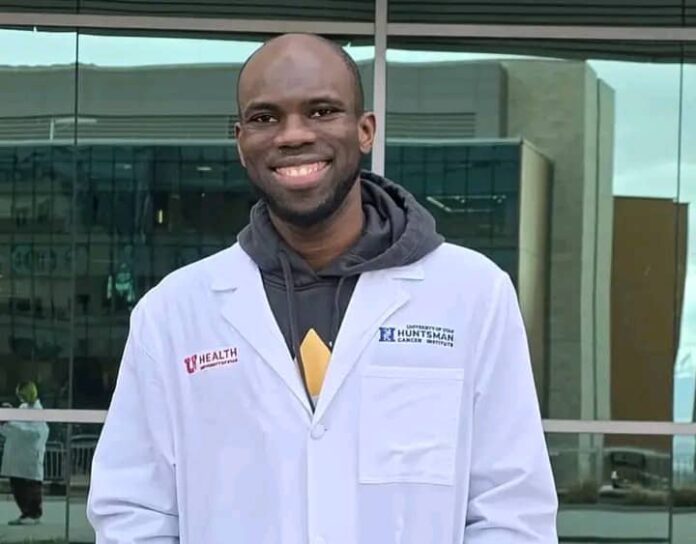

A United States-based Nigerian cancer scientist, Rahmon Kanmodi, has called for increased investment in musculoskeletal cancer research across Africa, with particular focus on Nigeria.
Kanmodi, a research fellow at the Huntsman Cancer Institute, University of Utah, stressed the need for modern genomic infrastructure, next-generation technologies and dedicated research centres capable of supporting global-standard basic and translational science.
He made the call in a research paper made available to our correspondent during the week.
The Nigerian student said musculoskeletal cancers, including bone and soft-tissue sarcomas, remain understudied in Africa despite their clinical severity and distinct epidemiological patterns.
It Hurts Seeing My Sister In Pain -Relative Of Lady Crushed By Lebanese Hit-And-Run Driver
According to him, limited genomic data from African patients continues to hinder scientific understanding and treatment outcomes.
“Take osteosarcoma, a bone sarcoma, for example, it is one of the most aggressive bone cancers, and several studies suggest that its incidence is highest among individuals of African descent.
“Yet genomic information from African patients remains limited, making it difficult to fully understand the biological factors that may influence disease behaviour in our populations,” Kanmodi said.
promotes inclusivity with sports
Speaking on the consequences of sarcoma, the researcher explained that the cancers often present late and progress rapidly, leading to life-altering and life-threatening outcomes.
“These cancers can destroy bone and soft tissue, leaving amputation as the only treatment option in many cases. Even after surgery, sarcomas frequently metastasise to vital organs, especially the lungs, and once that happens, survival rates drop sharply,” he said.
He added that poor access to early diagnosis, molecular profiling and targeted therapies across Africa further worsens outcomes.
Kanmodi emphasised that Africa’s participation in global cancer research depends largely on investment in biorepositories, genomic databases and molecular research facilities. “Large-scale biorepositories and genomic datasets are the backbone of modern cancer research,” he said.
He said, “They support molecular profiling, enable clinical trials, and facilitate data sharing. Expanding these resources in Africa would strengthen our capacity to develop targeted and personalised treatments.”
The scientist disclosed that his commitment to cancer research was further shaped by personal loss. “I lost a young niece to leukaemia, and that loss gave my scientific interests a deeper purpose,” he said, adding that his role as an assistant lecturer in the Department of Biochemistry at Lagos State University strengthened his resolve to mentor young scientists and pursue impactful research.
Now a PhD student in the Department of Oncological Sciences at the Huntsman Cancer Institute, Kanmodi’s research focuses on understanding the molecular mechanisms driving rare and aggressive soft-tissue sarcomas, with the overarching goal of developing novel and more effective therapeutic strategies.
By: Ayoola Olasupo