

By Biodun Busari
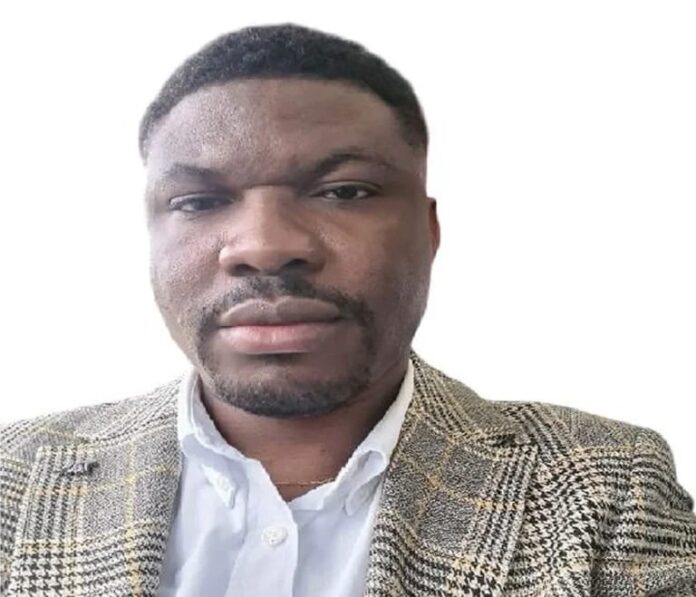
A United Kingdom-based data scientist and founder of the Morgan Charitable Foundation, Dr Philemon Adaghe, discusses with BIODUN BUSARI how he designed social services, mentorship programmes and career initiatives to help young Africans thrive
How would you describe your growing up?
I had an amazing childhood. I am the last child in my family, and my parents were both educated. Unfortunately, my mum is late, but my dad is alive. My siblings and I learnt so much about the value of education from them.
I am from Esan West Local Government Area of Edo State. Growing up, I saw many people who were passionate about education and had high expectations. Most of my relatives are medical doctors. Some are lecturers working with British organisations. Seeing their achievements motivated me to believe that I could also do well.
At the time, Ambrose Alli University operated a free education system that encouraged many people to attend school. This motivated us as children to embrace education. We had teachers, tutors, headmasters and headmistresses in our communities who inspired young people. In summary, I had a wonderful upbringing with a lot of encouragement to strive for excellence.
How would you relate this to your educational background?
Initially, I wanted to study Medicine and Surgery. However, I eventually studied Mechanical Engineering at the University of Benin. At one point, there was an outstanding National Youth Service Corps member who came to my community and encouraged me to study medicine. His name was Dr Emmanuel Azubuike.
I was very brilliant and good at Chemistry, so he often told me that I would make a good medical doctor.
Did you also consider becoming a medical doctor?
Yes, I did. Azubuike asked me if I wanted to become a medical doctor, and I said yes. However, I also loved watching my dad repair things at home, so I had a strong interest in engineering. He was skilled with almost everything. He made chairs, repaired household items, and fixed trucks and other machines.
Because I excelled in Biology and Chemistry, the doctor wanted me to become a medical practitioner.
He began teaching me Mathematics and Physics and would also share lessons on saving lives. All these experiences influenced my mindset towards becoming a doctor.
It was the corps member who registered me for the General Certificate Examination when I was in SS1, and I performed exceptionally well. After that, I sat for the University Matriculation Examination but failed.
I attempted it a second time and failed again. That was a major setback for me. I was still in secondary school at the time. I also sat for the university entrance examination, but still did not meet the cut-off mark for admission.
How did you feel about the result?
It was disappointing. At the time, Azubuike was practising as a surgeon at the University of Benin Teaching Hospital. Whenever I visited him, I admired his white coat. However, I eventually told him I would have to consider another course since I could not pass the UME for Medicine.
He agreed and encouraged me to pursue another discipline. I chose Engineering. He told me, “If you can’t be a medical doctor, you can be a doctor in another field.”
When I eventually sat for the UME again, I applied for Mechanical Engineering and Manufacturing at the University of Benin.
What are the highlights of your engineering experience?
For my final-year project at UNIBEN, I invented a machine designed to separate palm fruits from chaff before the preparation of banga soup. It was a requirement for engineering students to develop machines that could solve local problems.
After graduation, I established a small company where I started selling cars and spare parts. I genuinely enjoyed working with machines.
Did you produce the machine in commercial quantities?
I could not mass-produce the machine because of funding challenges. That has been the fate of many inventions and innovations in Nigeria. There was no sponsorship. I funded the project myself.
I believe this is where many of the country’s brightest talents are wasted because the challenges begin at the project stage and continue even after graduation. That is how many promising innovations are suppressed.
Most engineering students are required to produce something innovative, and I produced that machine. It was not that the machine failed to work. Unfortunately, because of the system, it remained only a final-year project.
If funding had been available, it could have created jobs for many people. This problem affected not just me but many students in similar situations. It would also have created opportunities for industrial trainees, with schools recommending students for practical training.
Was it after this experience that you travelled out of the country?
I first travelled to Ireland in 2006 for educational purposes. Unfortunately, I was deported. After that, I travelled to Sweden to pursue studies.
At the time, Sweden offered scholarships to international students, but I made the mistake of using an agent. Eventually, he collected money from me without securing admission.
I would not entirely blame him because I should have been experienced enough not to allow myself to be deceived. I should have been wiser and paid closer attention to the documents provided for the trip.
It was only when I arrived at the airport in Sweden that I realised the documents were not valid. I was informed that the university in question had not offered me admission. I stayed in a hotel for two weeks before returning to Nigeria.
I was still young and believed I could get things right. Thereafter, I moved to the United Kingdom.
Did you go to the UK for studies?
I have always loved travelling. Before moving to the UK, I had visited Singapore, Malaysia, Turkey and the United Arab Emirates.
I first came to the UK on a visitor’s visa. During my stay, I decided that I wanted to return. I went back to Nigeria, applied for admission and eventually returned to the UK on a study visa.
How has the experience been in the UK?
Since completing my studies, two major forces have driven my career in the UK.
The first is the Morgan Charitable Foundation, an organisation based in Nigeria that also operates globally. The foundation supports young people and families through medical assistance, educational materials and hope-giving initiatives.
After my studies, I became involved in various activities and established a company called Voices for Change. Looking at developments across African communities and seeing people relocate to different countries, I decided to help others avoid some of the challenges I faced.
During my travels, I could easily have become a victim of trafficking, exploitation or drug-related crimes. Today, many migrants arriving in different countries face exploitation and other forms of abuse.
As a result, I chose to become a voice for the voiceless and address situations where people are deprived of opportunities and support. For example, many Nigerians who move to the UK often find it difficult to settle into their new communities.
What is the second aspect?
Aside from engaging in social services, where I work as a mentor to educate and support Nigerian and African communities, I am also a data scientist and a university lecturer. That is my second driving force. Through my academic work, I help refine some of the ideas behind my social service initiatives.
With your experience, how do you think Nigerian youths can thrive in the diaspora?
There is never a perfect time to get things right. Once you decide to move to a particular country, do your research before you arrive. Understand your skills and identify what you are good at.
For instance, if you are moving to London and you are highly skilled in Mathematics, look around your community and find out whether there are families that could benefit from your expertise. If face-to-face interaction is not possible, you can create an online platform where young people or families can access your services.
People simply need to identify needs and provide solutions. There is no skill that is useless in this part of the world. You may have a master’s degree or a PhD, but without practical skills, you may struggle to distinguish yourself.
The UK, like many developed countries, provides opportunities for those who are determined to succeed. One of the biggest challenges is that many people who move here are unwilling to unlearn and relearn. Skills require constant improvement. You must continue developing yourself.
Some people focus primarily on earning money to pay off car loans, buy new clothes, acquire a house, attend parties, or send money home. While these are admirable goals, we must continue upgrading our skills because everyone needs to remain competitive and marketable.
How do you combine lecturing with all you do?
I studied at the University of Derby. Currently, I lecture at the University of Bradford in West Yorkshire.
The experience has been both rewarding and challenging. It is challenging because I meet remarkable people every day and learn from them. I enjoy learning because the moment you stop learning, you begin to lose relevance.
I interact with people from diverse backgrounds. We now have younger generations, particularly Gen Z, who bring fresh ideas and perspectives. Many of them are highly intelligent and deeply interested in Artificial Intelligence. If they are determined to excel, they certainly can.
At the same time, lecturing is fulfilling because it gives me the opportunity to impact lives. It allows me to set a standard and showcase the potential of Nigerians. I am Nigerian before I am British, and I know the immense potential we possess. That is one of the reasons I chose to become a mentor. Although I teach Engineering Management, I do much more than teach; I strive to make a positive impact on people’s lives.
How do you think the Nigerian government can position our youths for global success?
I will answer that with an example. While studying at the University of Derby, I worked around Rolls-Royce, where sustainable and renewable energy solutions were being developed. I worked with a team of technicians and developers who produced advanced machines for Boeing 777 aircraft.
Many of those students were sponsored by local councils, universities, or private companies. If a country fails to fund education adequately, it has failed its future. Education is paramount and should never be treated as negotiable. It is one of the most important investments any nation can make.
A country that neglects education is setting generations up for poverty. As a Christian, I often reflect on the biblical emphasis on knowledge, wisdom and understanding. Even the Bible recognises the value of learning.
If you look at my final-year project, a serious government would have seen its potential and invested in it. That is how talents are nurtured. This is what developed countries do. Many of the cars, aircraft, solar panels, mobile phones and other innovations we see today emerged because universities had laboratories, funding and support systems to develop them.
What is the role of technical education in shaping the prosperity of the country?
Technical education is extremely important. The educational system must clearly distinguish between professional and technical pathways, just as technical colleges, polytechnics and universities do.
For example, if someone wants to become a bricklayer, they should be able to attend a technical college, obtain the necessary certifications, and then proceed to an apprenticeship programme. Universities should also maintain strong partnerships with industries.
Access to industrial training opportunities should not depend on whether you come from a wealthy family or have influential connections. Merit should be the deciding factor. A project supervisor or course adviser should be able to recommend qualified students to relevant industries for practical exposure.
The government must create an enabling environment for young people to thrive. It must also leverage technology effectively. It is worrying to find mechanical engineering students who cannot loosen a car bolt or electrical and electronics students who do not understand how basic electrical components are produced.
Many students graduate with limited practical experience and struggle to create or innovate. These are issues that require serious investment.
If practical training and innovation are not prioritised, how do we accommodate the thousands of graduates produced every year? The government must create opportunities and provide the infrastructure needed for people to succeed.
It saddens me that Nigeria has not fully embraced the direction in which the world is moving. Many countries are establishing innovation hubs and technology centres to drive development. That is how Nigerian talents can be empowered to compete successfully on the global stage.