

By Stephen Angbulu
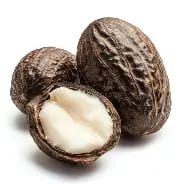
Nigeria forfeited approximately N4tn in unrealised market value of its shea nut exports in the past year, according to the latest reports by the Presidential Food Systems Coordinating Unit.
This was as the country’s shea nut annual output of 346,933 metric tonnes accounted for nearly 40 per cent of global supply.
However, the report says the country currently captures less than one per cent of the $6.5bn global shea industry.
The bulk of the wealth it generates, the presidential assessment found, is transferred to refiners and manufacturers in Europe, Asia, and North America.
The findings are contained in a rapid assessment of the country’s shea nut value chain commissioned by the Presidential Food Systems Coordinating Unit and obtained by Sunday PUNCH.
The study surveyed over 2,000 pickers and 65 processors, ranging from household producers to semi-industrial operations, and key stakeholders, including agriculture commissioners and industry associations, across five key producing states.
They include Niger, Benue, Kwara, Plateau, and Oyo, covering 29 local government areas and 211 villages.
Computations by Sunday PUNCH revealed that a 40 per cent share of global production would translate to at least 40 per cent of global market value, which is roughly $2.6bn annually.
Nigeria currently earns an estimated $65m, leaving a gap of approximately $2.535bn or N4tn at current exchange rates.
According to the assessment, the loss stemmed from a near-total absence of processing systems, as shea butter, which commands 10 to 20 times the price of raw kernels in global cosmetic, confectionery, and pharmaceutical markets, is mostly extracted overseas after exports from Nigeria.
In August 2025, President Bola Tinubu announced an initial six-month ban on the export of raw shea nuts. In April 2026, the President extended the ban to February 2027.
Under the ban, all shea exports must pass through the Nigeria Commodity Exchange framework, and previous exemptions allowing direct raw-nut shipments have been removed.
In April, the Federal Government revealed plans to scale up its processed shea earnings from $65m to $300m in the near term, with potential growth to $3bn by 2027 as the global shea market expands toward a projected $9bn by 2030.
A statement signed by the Technical Assistant to the President on Agriculture (in the Office of the Vice President) and Head of the PFSCU, Marion Moon, quoted the Minister of State for Industry, John Enoh, as saying, “The era of exporting raw nuts while importing finished products must come to an end. The future lies in industrialisation, value addition, and regional integration.”
According to the assessment, a principal driver of Nigeria’s shea value loss stemmed from what it described as “raw nut leakage.”
It said an estimated 90,000 metric tonnes of shea kernels exit the country annually through informal, undocumented trade routes, valued at approximately N234.45bn at the national average picker price of N2,605 per kilogramme.
This volume, the PFSCU said, bypasses customs, generates no export duty or traceable trade data, and strips domestic processors of the raw material they need to scale.
It added that Nigeria’s installed shea processing capacity stands at approximately 160,000 metric tonnes per year, but operates at just 35 to 50 per cent utilisation due to raw nut shortages, unreliable power, outdated equipment, and limited access to finance.
“Installed processing capacity is ~160,000 MT/year, but operates at 35–50 per cent due to raw nut shortages, driven by informal exports (90,000 MT/year) and regional trade shifts,” it stated under Processing Constraints.
The situation, the report revealed, worsened amid a recent price spike. In Niger State, which hosts 54 per cent of Nigeria’s shea trees, the price of raw kernels jumped from N2,600 per kilogramme to 4,800 per kilogramme in less than a year, further squeezing processor margins.
As much as half of the annual shea harvest in Niger is left uncollected in the wild, it added.
The assessment shows the value chain is almost entirely sustained by women who face systemic exploitation at every stage.
“Over 95 per cent of pickers and 90 per cent of processors are women, yet they face exploitation by middlemen, lack storage, and have limited access to finance and modern tools,” the report read.
Although 90 per cent of processors across the five states are women, only 21.6 per cent of those surveyed had any form of nut storage, and 78 per cent sell their harvest immediately after collection, typically during seasonal price gluts.
Seventy-two per cent sell through middlemen at prices 20 to 30 per cent below prevailing market rates, and only 28.9 per cent belong to any cooperative or organised group, with cooperative membership in Benue and Plateau falling below two per cent.
The report also revealed sharp income disparities across the five states surveyed.
Pickers in Oyo state earned an estimated N5.57m per season from dried nuts, the highest in the survey, benefiting from proximity to semi-industrial buyers and better-quality output.
In Kwara state, however, pickers earned only N1.45m, the lowest, despite comparable picking volumes, largely because of weak market linkages and aggressive middlemen activity.
It put the national average seasonal income from dried shea at N3.4m.
The assessment also revealed that external market dynamics have intensified Nigeria’s exposure.
Mali and Burkina Faso imposed bans on raw nut exports in October 2024; Togo followed in early 2025, while Ghana introduced a case-by-case export approval system.
The bans, it revealed, have redirected international buyers to Nigerian markets, inflating domestic prices and deepening informal exports as aggregators exploit arbitrage opportunities across porous borders.
It said without a coordinated Nigerian response until August 2025, the country effectively became a subsidised source for other nations’ processors while its own plants ran below half capacity.
To reverse the trend, the PFSCU recommended a Local Buyer Agent model to disrupt middlemen networks and improve farmgate price transparency, low-interest working capital for processors, and shared-use warehouses and drying platforms in Niger, Kwara, and Oyo.
It also called for a national quality and traceability certification framework aligned with EU and ECOWAS standards, NAFDAC registration pathways for rural cooperatives, and federal-state coordination through a central shea policy architecture.
The Unit’s monitoring and evaluation targets include raising processor utilisation from 50 to 80 per cent within one year and raising the share of processed product exports from 8 per cent to 25 per cent by 2026.
It also plans to reduce informal trade by 40 to 60 per cent by mid-2026 and to have 50 per cent of pickers integrated into formal aggregation systems.
At the 2026 Global Shea Alliance Conference held in Accra, Ghana, in April, the National Shea Products Association of Nigeria called for increased enterprise growth, regional trade, financing and value-added production across the global shea value chain.
Chairman of the Global Shea Alliance, Ali Saidu, argued that increased investment in processing infrastructure and access to finance for small and medium-scale enterprises would help African producers move beyond exporting raw commodities.