

By Emmanuel Ndon
The Akwa Ibom State Government’s biometric registration initiative for commercial tricycle and minibus operators represents a practical and timely step towards strengthening road security, improving transport administration and enhancing commuter safety across the state. By linking commercial transport operations to a verifiable identity system, Governor Umo Eno’s administration is laying the foundation for a safer, more accountable and better organised public transport network.
The initiative, being implemented through the Ministry of Transport, the Ministry of Science and Digital Economy and the Akwa Ibom State Internal Revenue Service, reflects a coordinated approach to digital governance and public safety. It recognises that effective security is not achieved solely through the deployment of security personnel, but also through systems that improve accountability and make unlawful activities easier to detect and investigate.
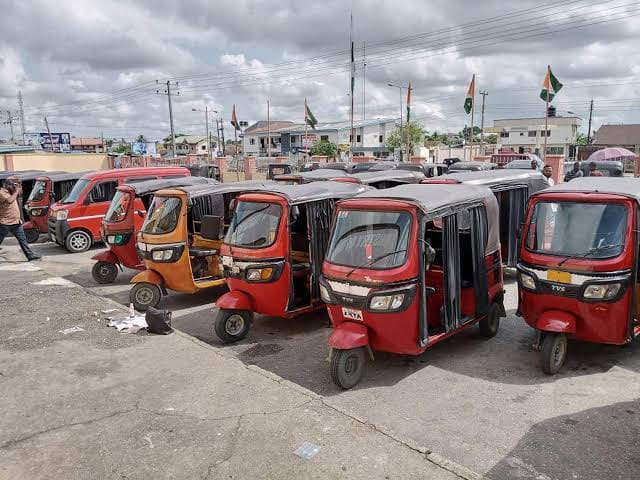
For a state with increasing commercial mobility, the significance of the exercise cannot be overstated. Tricycles and minibuses remain the primary means of transportation for thousands of residents each day, making proper regulation essential for the safety of both operators and passengers. Biometric registration enables government to maintain a reliable database of operators, creating a stronger framework for monitoring and regulation.
The decision to make the registration free of charge and accessible without requiring a bank account is equally significant. It removes barriers that might have discouraged genuine operators from participating and ensures that compliance is open to everyone, regardless of financial status. This inclusive approach reflects an administration that understands that public safety measures must remain accessible to ordinary citizens.
An important feature of the programme is the issuance of a State Vehicle Identification Number alongside a unique QR code for every registered operator. Together, these provide an additional layer of traceability that can strengthen law enforcement, improve transport records and enable security agencies to verify operators more efficiently whenever necessary. At a time when states are placing greater emphasis on public safety, such a system represents a valuable investment in accountability.
The registration exercise, scheduled to commence on Friday, 17 July 2026, at the Ministry of Transport Office along Ikot Ekpene Road, Uyo, has also been designed with accessibility in mind. By establishing a clear registration process at a central public facility, the government is encouraging broad participation while ensuring that the exercise is conducted in an orderly and transparent manner.
Beyond its administrative benefits, the initiative offers reassurance to commuters. A properly registered transport system increases public confidence by ensuring that operators can be readily identified when necessary. This contributes to a safer travelling environment for workers, students, traders, families and other residents who depend on commercial transport every day.
The programme also aligns with Governor Umo Eno’s broader commitment to protecting lives and property through preventive measures. By integrating technology into transport regulation, the administration is strengthening its ability to prevent crime rather than merely responding after incidents occur. A properly managed biometric database becomes a valuable resource for both security planning and transport management.
The initiative is equally important from the standpoint of institutional efficiency. A well-organised transport sector improves compliance, reduces revenue leakages and provides government with more accurate data for planning and policy implementation. At the same time, registered operators benefit from greater legitimacy and formal recognition within the state’s transport system.
The government’s appeal for operators to support efforts aimed at securing commuters is both timely and appropriate. Safe roads are the product of shared responsibility. While government provides policy direction and infrastructure, transport operators also have a crucial role to play in maintaining public confidence and contributing to community safety.
Viewed in its broader context, the biometric registration programme forms part of a wider effort to modernise Akwa Ibom’s transport system while strengthening grassroots security. It combines technology, effective administration and public safety within a single framework, demonstrating how practical governance can deliver visible improvements to everyday life.
Governor Umo Eno deserves commendation for supporting an initiative that promotes both public safety and administrative efficiency through an orderly and inclusive transport identification system. It is a thoughtful intervention that offers tangible benefits to commuters, transport operators and security agencies alike while reinforcing the state’s commitment to modern governance.
Ultimately, this biometric registration exercise extends beyond transport documentation. It represents another step towards building a safer, more disciplined and more accountable Akwa Ibom, where technology supports security, public confidence is strengthened and every journey begins within a system designed to protect the people it serves.