
By Biodun Busari
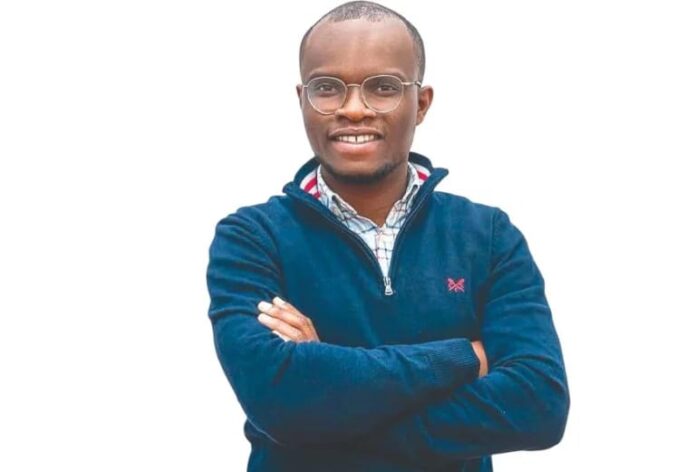
Senior Lecturer in the Accounting and Finance Division at Nottingham Business School, Nottingham Trent University, United Kingdom, Dr Oyedele Ogundana, speaks with BIODUN BUSARI, about the British educational system, among other issues
Could you tell us about your journey to becoming a senior lecturer at a British university?
I came to England in 2013 for my master’s degree. I later earned my PhD in Business. I didn’t plan to stay in the United Kingdom because I had a good job in Abuja. I was doing very well.
I met my wife, who is Nigerian but grew up in the UK. After that, my focus began to change regarding whether to stay in the UK. Initially, I didn’t want to remain, but I returned to pursue my doctorate and then became a lecturer at the university.
I started teaching there in 2016. It has been a combination of God’s grace and sheer hard work. Hard work knows no boundaries, whether in the UK or Nigeria. You just have to work hard. When you put in a lot of work, the sky is the limit.
What were the challenges like for you?
One of the challenges was the transferability of our qualifications. When I came here, I pursued my master’s degree. I’m a fellow of the Association of Chartered Certified Accountants. I obtained that qualification alongside my master’s degree in Accounting and Finance.
I also became a fellow of the Association of International Accountants. So, I completed professional programmes and acquired qualifications that would appeal on the global stage. I couldn’t afford to limit myself to the Nigerian context alone. By the grace of God, I’ve travelled to many countries.
The only way you can appeal to them is by having international qualifications that cut across boundaries. Unfortunately, many developed countries don’t give adequate recognition to qualifications obtained from Nigeria. So, one of the challenges is trying to utilise your Nigerian qualifications in Europe.
Was it easy to adapt to the British learning system?
Another major challenge was understanding the educational system. I have been a member of the Institute of Chartered Accountants of Nigeria since 2013, but the way we study in Nigeria is largely to memorise and pass examinations. The first challenge was trying to understand the system. It was entirely different here.
If you cram in the UK, you will fail. Everything is about applying what you have learnt. I struggled initially. But the moment I understood how to answer examination questions, interpreted question directives, and adjusted accordingly, my perspective changed.
Initially, I wrote my first examination and struggled, but in the second one, I passed everything in one sitting. So, I would say that was the second challenge. There were also financial challenges. But my response was, ‘Don’t get nervous and don’t give up.’
How would you compare the two educational systems in terms of curriculum and relevance?
Based on my personal experience, I studied in a Nigerian university between 2004 and 2008/09. From that perspective, the educational system in Nigeria is generally good and strong, but I think the biggest gap lies in the application of knowledge. The courses need updating. In the UK, we update our curriculum regularly to ensure it remains relevant to employers’ expectations.
We investigate what the labour market is looking for so that our students become employable and acquire the necessary skill sets. I spoke with a colleague whom I met in the United States, and we discussed some of these issues. We use many case studies so that students can see how what they learn applies to real-life situations.
How does theory fit into the educational system?
In this era of artificial intelligence, AI can answer many of the questions we set for students. In developed countries, we try as much as possible to give students questions that require deep thinking and active engagement. For example, I teach postgraduate students in Accounting and Finance. My module is Financial Statement Analysis.
We examine organisations’ financial statements over several years. For example, we may analyse financial statements from 2016 to 2026. Students study them and make recommendations on whether an investor should invest or whether, from a creditor’s perspective, the organisation should receive funding.
It’s more grounded in reality. Even then, students still struggle to secure jobs. That, I believe, is where the gap lies. In Nigeria, many of our curricula are outdated. Many of the courses are no longer relevant to today’s workplace. As a matter of fact, many students have to learn, unlearn and relearn. That’s my observation.
What do you think Nigerian universities should do to compete with foreign universities on the global stage?
From my perspective, I’ve always believed it is not about competition but collaboration. For example, I have been doing a lot of research and seeking funding. That funding has always been aimed at collaborating with Nigerian universities so that some of the things we do in the UK can be transferred. While these practices work in the UK, they must be adapted to local realities.
So, the solution is for us to work collaboratively, particularly with those of us in the developed world. As I said earlier, I recently met the Director of the University of Lagos Business School in Washington, D.C. We discussed how collaboration could improve Nigeria’s educational system.
We should encourage Nigerians in the diaspora to transfer some of the knowledge and experience we have gained. You may be surprised to know that universities in the UK do exactly the same thing. I serve as an external examiner at universities such as the University of Bolton, Greater Manchester, St Mary’s University, and others.
One thing we always do is bring what we have learnt elsewhere back into our institutions. We share experiences so that our universities can also improve. So, why shouldn’t we do the same in Nigeria?
What ways can these collaborations work?
We can work together to improve curricula and other aspects of education. One cost-effective approach is to collaborate with Nigerian and African academics working in universities abroad. We should identify areas where improvements can be made. Unfortunately, some people don’t want this to happen.
Some feel threatened by such collaborations. My view is that we should work together. We can partner with Nigerians in the diaspora who are willing to collaborate with colleagues back home and share valuable knowledge. These are things that are already being done.
We can also share learning materials. One thing I do as a researcher and journal editor is to give some colleagues access to journals for which I serve as an editor. I’ve also collaborated with them regarding Article Processing Charges, which amount to thousands of pounds, enabling them to publish free of charge.
So, we can collaborate with colleagues and reduce costs. By doing so, we can also position ourselves on a higher pedestal.
How would you advise Nigerian students planning to travel to the UK amid stricter immigration policies?
The system remains open. If they choose to come, they must ensure they have adequate financial resources so they don’t struggle. It’s a completely different environment here. It is an individualistic society. They must make sure they have sufficient financial backing to cover tuition, accommodation, feeding, and other expenses. If they can meet those requirements, they are welcome to study in the UK.
Nigeria is still battling brain drain. How can we build a society that retains its intellectuals?
It still comes down to collaboration. Many talented people leave not simply because they want to, but because they lack access to opportunities, funding, mentorship, infrastructure and networks needed to reach their full potential. The solution is not to stop people from travelling or gaining international experience. Rather, we should build strong partnerships between Nigerians in the diaspora and professionals, institutions and entrepreneurs back home.
Through knowledge sharing, research collaborations, mentorship, investment and technology transfer, we can create an environment where talented people can thrive without feeling that leaving the country is their only option.
As the saying goes, ‘If you want to go fast, go alone; if you want to go far, go together.’ Those of us in the diaspora have a responsibility to work with colleagues in Nigeria and across Africa to strengthen our universities, industries, healthcare, technology and other critical sectors.
Likewise, government policies should actively encourage and support these collaborations by creating an enabling environment, investing in education and research, and providing incentives for innovation and partnerships.