
By Emma Akpabio
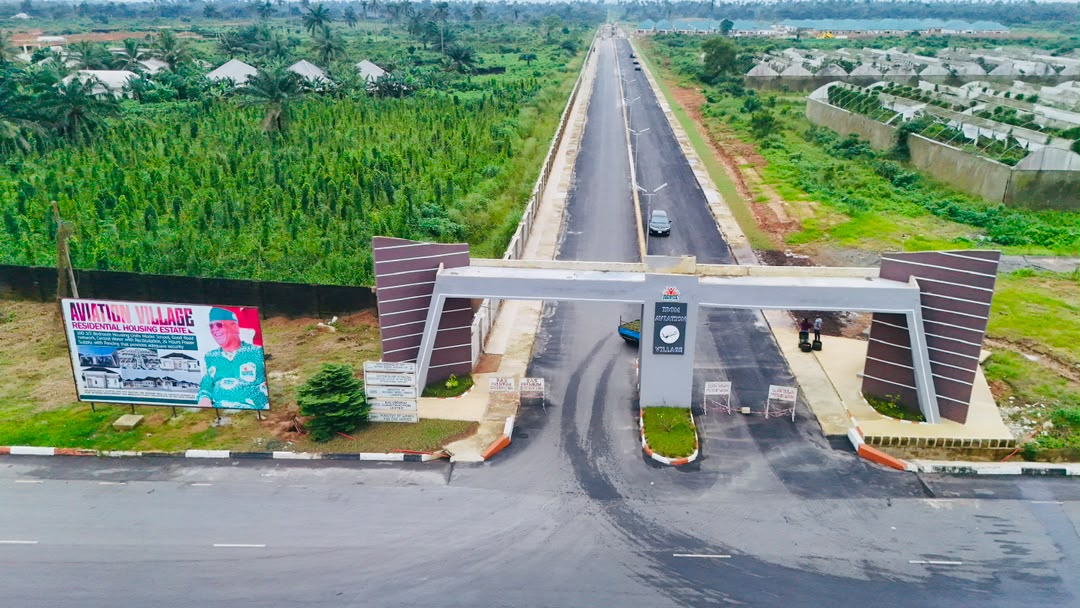
As President Bola Ahmed Tinubu visits Akwa Ibom in September to commission the ARISE Palm Resort, the 14km Nsit Atai – Okobo road and other landmark projects, one project that has particularly captured my attention is the Aviation Village.
Perhaps it is because, at first glance, it does not seem to fit the name.
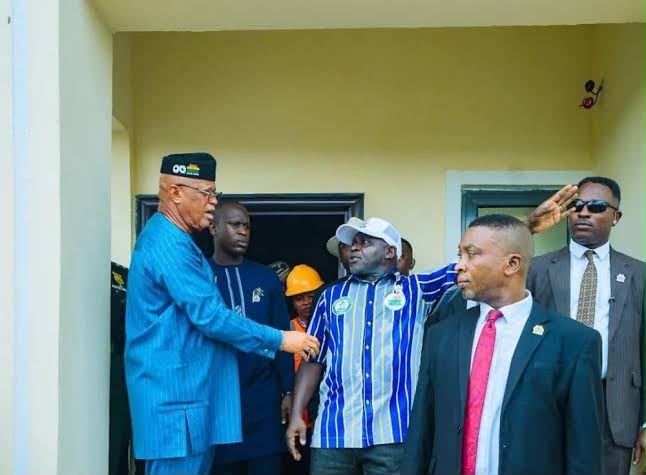
The curiosity began yesterday when Governor Umo Eno returned to Akwa Ibom from an official trip. After touching down at the Victor Attah International Airport, his first port of call was the much-talked-about Aviation Village. I simply joined the convoy, determined to see for myself what had made this particular project significant enough to attract presidential inauguration.
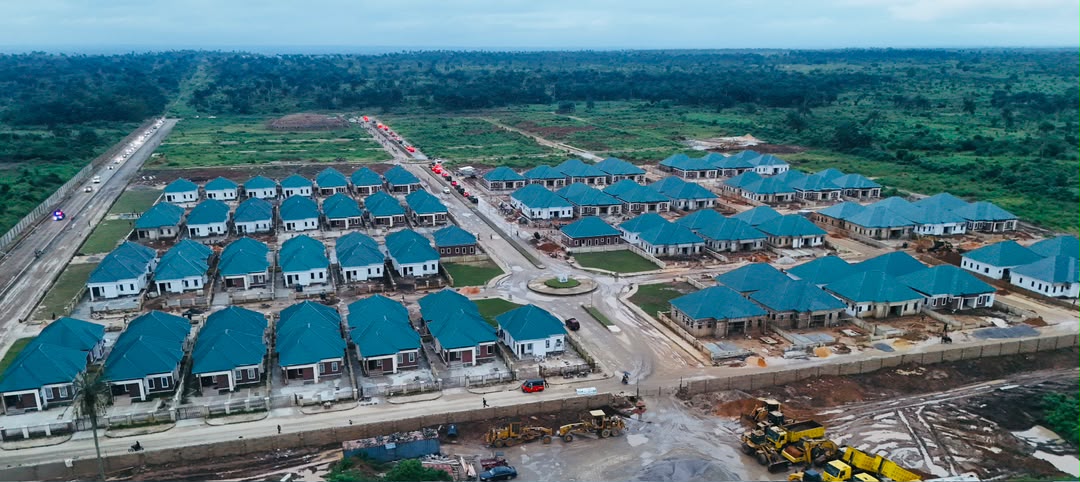
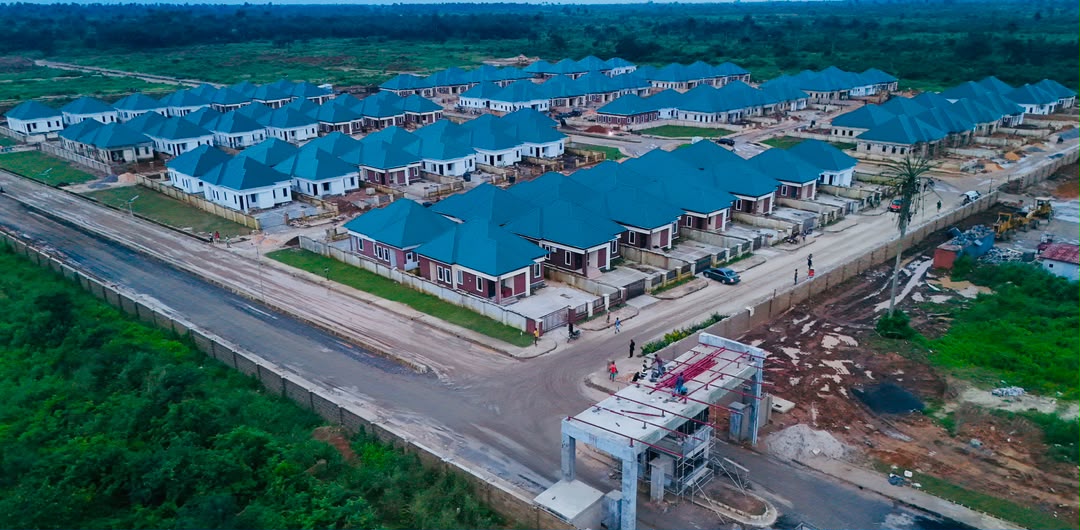
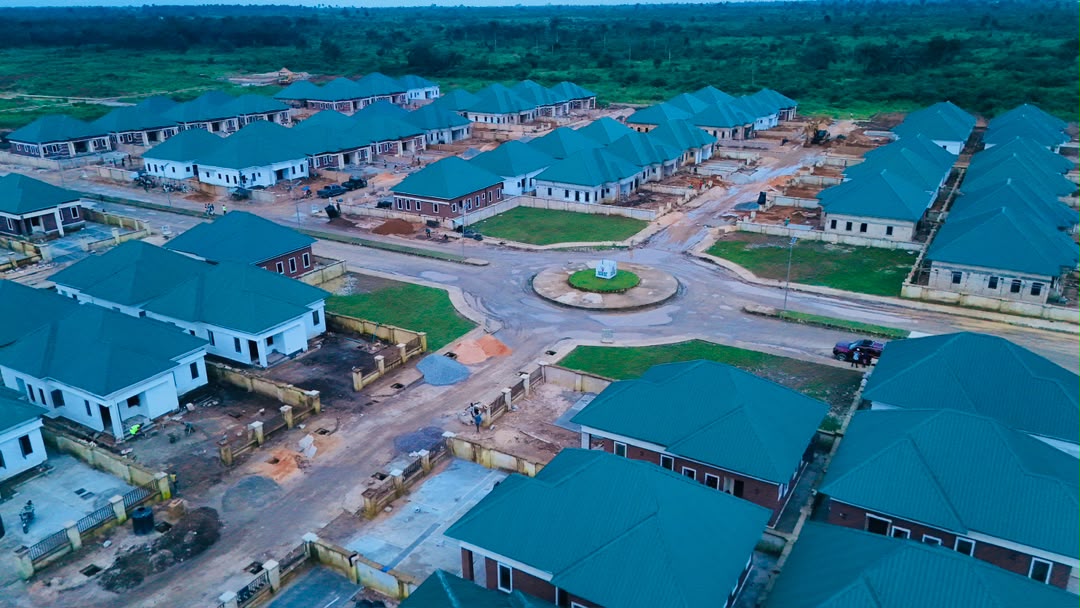
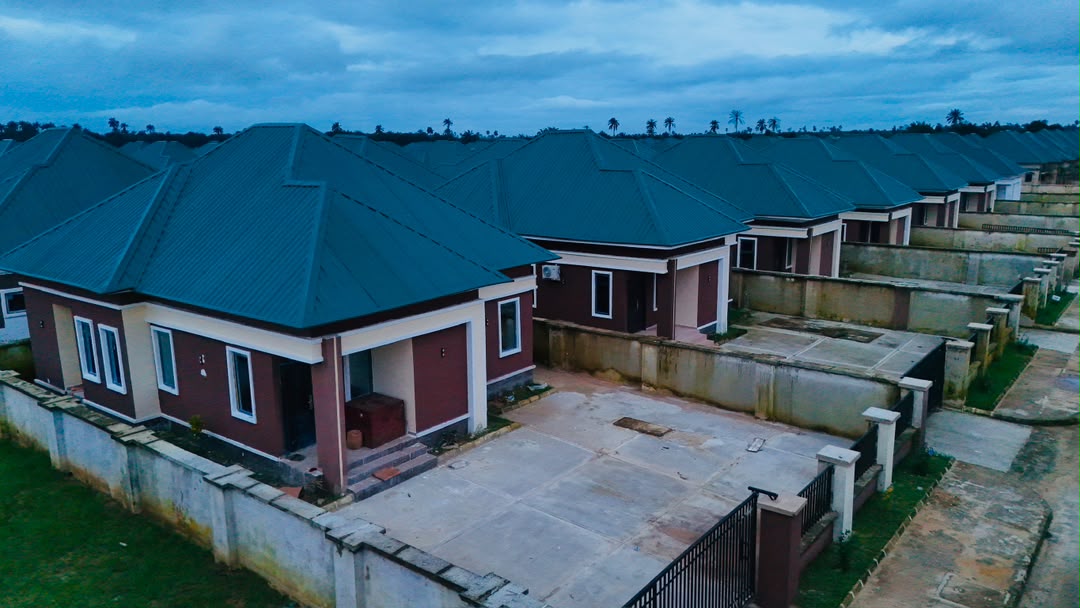
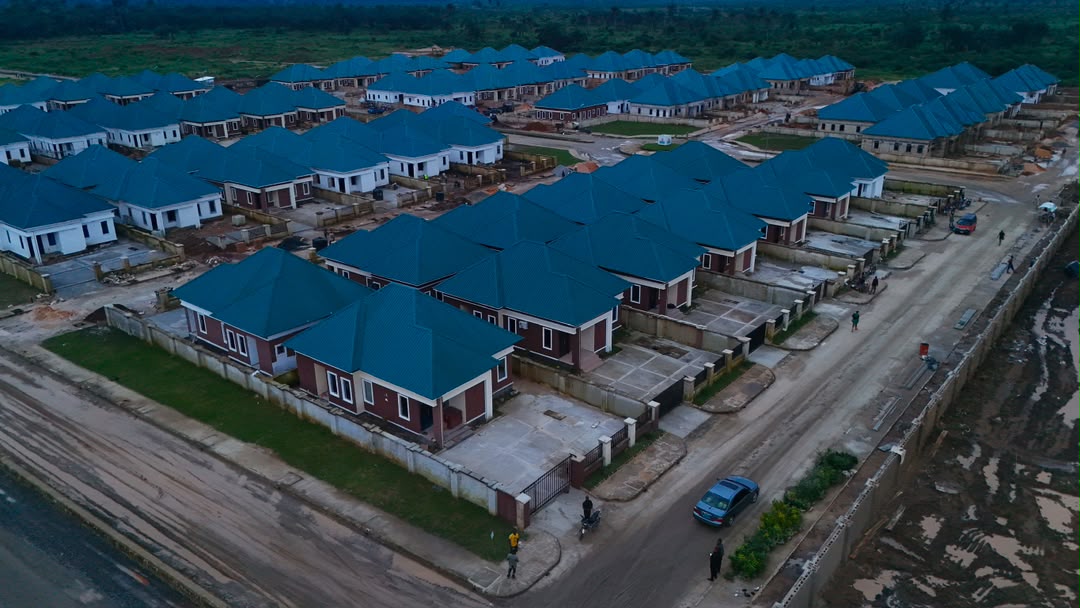
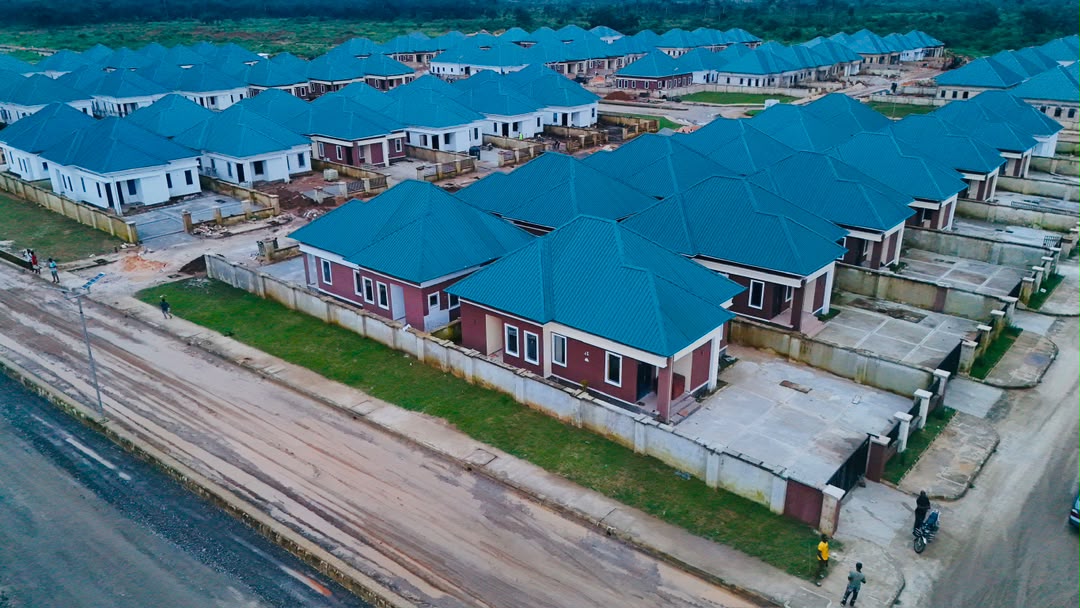
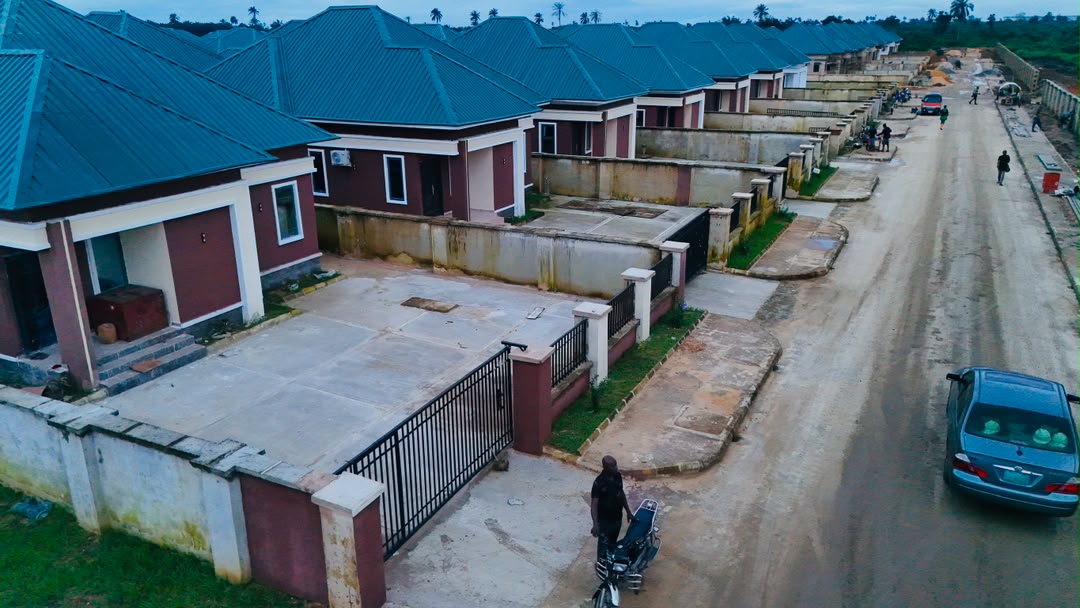
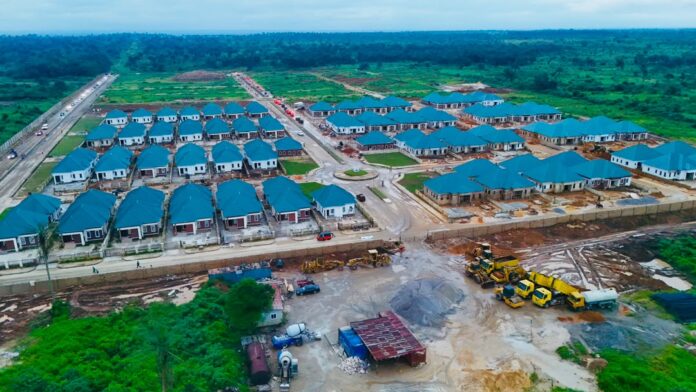
On arrival, I sent my drone up for an aerial view. What appeared before me was, at first glance, surprisingly modest: 100 housing units; 50 three-bedroom flats and 50 two-bedroom apartments.
I looked again, and the question came almost instinctively: Why is this called a village?
For a Governor whose administration has delivered more than 1,100 housing units across different categories in just three years, 100 units appear too modest to ordinarily attract the designation village.
In Akwa Ibom, where more than 4,000 villages are said to exist, although only 2,272 are gazetted, the name naturally invites even more curiosity.
Now consider the numbers:
Within three years, the Governor Eno-led administration has delivered 461 ARISE Compassionate Homes, 230 housing units at Grace Estate, 100 units for healthcare workers at the Medical City, 50 units at the Judiciary Quarters, 64 units for legislators and members of the Executive Council at Dakkada Luxury Estate, 35 units at Ewet Luxury Garden and 31 residences for Local Government Chairmen, among others.
Yet, none of these projects carries the name village. The quest for what makes Aviation Village different took my curiosity back to 2024, when Governor Eno broke ground for the project.
At the ceremony, the Governor explained that this first phase would provide 100 residential units for aviation personnel from about 12 aviation-related parastatals. The rationale was practical: put critical aviation personnel close to their duty posts.
But there was something more revealing in the Governor’s disclosure that day.
He said the second phase would include an aviation school, a model school, a shopping centre and other supporting facilities. More importantly, he explained that the broader objective was to expand the aviation ecosystem and position Akwa Ibom as a major aviation hub.
Suddenly, the 100 houses began to look less like the destination and more like the beginning. That, I think, is where the real meaning of Aviation Village begins.
A village, in its traditional sense, is defined by people, identity and community. But modern development has expanded the meaning. A village can also be a deliberately planned community built around a shared purpose, where housing, services, institutions and economic activities function as parts of one ecosystem.
By that definition, Governor Eno is cooking something much bigger. Aviation Village is not merely the 100 houses; it is what is being assembled around them.
The houses provide the residential foundation, while the surrounding infrastructure supplies the services, opportunities and connectivity capable of transforming a collection of buildings into a functioning community. And the pieces are beginning to emerge.
The Airport Clinic, also ready for commissioning, introduces healthcare into the airport environment. The recently completed world-class terminal has transformed the state’s gateway and elevated the passenger experience, while the Maintenance, Repair and Overhaul, MRO facility is nearing completion, adding technical depth to the aviation ecosystem.
Then there is the proposed aviation school, which points towards training and human-capital development. Along the same corridor, new private universities are emerging, while private estates, a sports academy, businesses and other developments are taking positions around the expanding infrastructure.
These are no longer isolated interventions, new urban cluster is unfolding. A deeper reflection revealed a compelling logic to beginning with accommodation.
Aviation is an industry where time is critical. Pilots, engineers, technicians, security personnel, emergency responders and other essential workers must be available when duty calls, sometimes at hours when most people are asleep.
Providing accommodation within the airport environment is therefore more than a welfare gesture. It is an investment in the human infrastructure required to operate a modern aviation hub efficiently.
A worker who lives close to the airport spends less time commuting, responds faster to emergencies and operates within an environment designed around the demands of the industry.
In that sense, the 100 homes serve a very specific purpose. They are not simply houses. They are the first residents of an idea, but the story does not end at the airport fence.
The surrounding corridor is quietly changing the geography of Uyo. New universities are emerging. Businesses are following. Residential developments are expanding. Roads and other infrastructure are opening up previously less-developed areas.
Infrastructure is creating a new centre of economic activity, gradually drawing the airport closer to the everyday life of the capital.
This is how cities expand, not necessarily by redrawing their boundaries, but by creating new centres that eventually become part of the city. Uyo is beginning to stretch towards the airport and this is where the significance of Aviation Village becomes clearer.
Some may look at the project and ask whether 100 housing units are substantial enough to warrant a presidential commissioning. On the surface, the question may appear reasonable. But it misses the bigger picture.
When President Bola Ahmed Tinubu commissions the Aviation Village alongside the Airport Clinic, the Nsit Atai – Okobo road, the ARISE Palm Resort and other projects, the ceremony should not be viewed as the inauguration of 100 houses in isolation. It is the inauguration of a vision.
It is the unveiling of a new settlement taking shape around one of Akwa Ibom’s most strategic assets, a settlement designed around aviation, housing, healthcare, education, hospitality, commerce and connectivity.
More importantly, it signals the emergence of a new urban direction, one that gradually stretches the state capital beyond the traditional confines of Uyo Local Government Area.
Perhaps, therefore, the most important thing about Aviation Village is not the 100 homes that stand there today, but what they represent.
Governor Eno is creating another kind of village, one built with modernity and class, where the old concept of community meets the demands of a growing, globally connected city.
The 100 homes are only the beginning. The real village is what Akwa Ibom is building around them.