
By Ayoola Olasupo
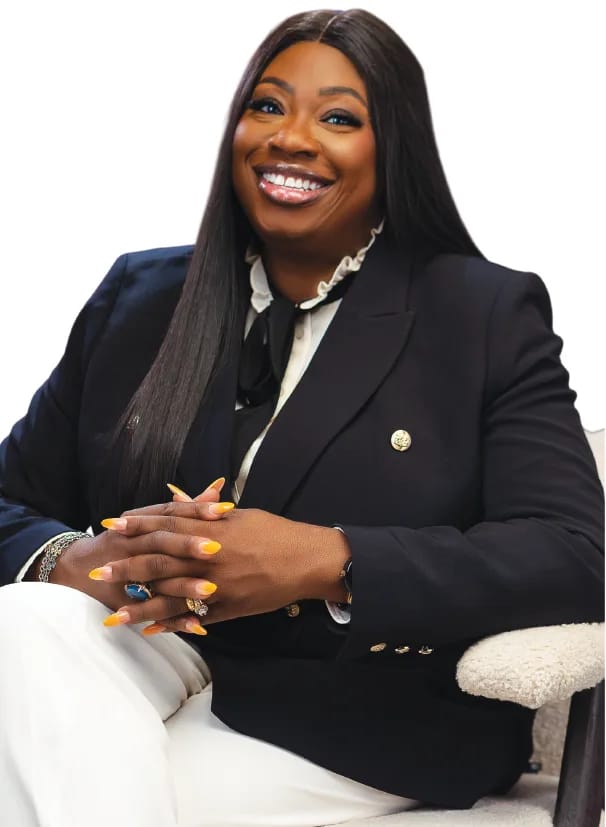
United Kingdom-based founder of Female Techpreneur, Olubukola Babajide, who was recently honoured as a Member of the British Empire, speaks with AYOOLA OLASUPO about her journey from banking to building a career in technology, overcoming discrimination and using her recognition to inspire Nigerians
Can you tell us about your childhood and upbringing in Nigeria?
I was born and raised in Nigeria and spent my early years in Ile-Ife, Osun State; my mother is also a princess.
I studied Economics, had my youth service, and started working in Abuja. My youth service was in Abuja. I started my working life in a bank as a banking officer, so I was doing marketing at the time. What I have learnt from Nigeria is resilience and discipline. My mother was a retired principal of a secondary school and a disciplinarian.
I believe Nigeria is full of resourceful people, and everywhere we find ourselves, we always make a mark most of the time, for positive things, and that’s what we like to spotlight. I have siblings, from a family of five, and I’m the first daughter of my parents.
What career path did you plan to choose while growing up?
I think I wanted to become a fashion designer. I remember reaching out to a company in the US without thinking about how I would fund it. I just liked the way they created their designs. The company still exists today. One thing I didn’t realise then is that you can like something, but you also need the talent and ability to build on it.
We cannot all become something simply because we want or wish for it. So, that was what I wanted to do. I showed my dad the form, and he said, “This is expensive. How are we going to fund this?” He advised me to focus on my studies and cross that bridge when we got there.
I had always been interested in technology. While in Abuja, I registered at an institute to learn more about Information Technology. However, I didn’t see it as a career path because it was male-dominated. I simply wanted to improve my skills and perform better at work.
Looking back, I believe technology was not adequately presented to young people then. Today, there is a huge opportunity to equip Africa’s young population with digital skills so they can compete globally, secure jobs and create businesses.
What prompted you to move to the United Kingdom?
I didn’t initially plan to move to the UK because I preferred the US. But I have always been a voracious reader. Growing up, there were fewer distractions, so I read a lot. Through books, I already had an idea of certain places in the UK, even though I had never been there. There was also a game called Monopoly, which exposed me to property investment and opened my eyes to the fact that there was a lot happening outside my locality and Nigeria.
Eventually, I had the opportunity to visit the UK on holiday. I came, did some shopping, bought things and took them back to Nigeria to sell. Around that period, I also started considering changing my career and doing the Association of Chartered Certified Accountants, which is equivalent to ICAN in Nigeria.
Something happened at the bank where I was working. We were sent for training, and there was a requirement that those who received the training remain with the organisation for a certain period. I don’t want to call it a bond, but there was an obligation attached to the training.
I then thought, “Let me try my luck abroad.” During my holidays and business trips, I had also met someone, and we were in a relationship. The long-distance relationship made us think about eventually being together. Since I was also considering going abroad to study, I decided to go. That was how I found myself in the UK.
What happened when you arrived in the UK?
When I arrived, I didn’t initially want to take just any job. I was already working in a bank, so I wanted a corporate position. However, I had to retrain. My brother was an IT professional, and my partner was also working in IT, so I was surrounded by people in technology. I decided to explore the field.
Before getting into technology, I had to take an administrative job because employers did not readily recognise my Nigerian degree and experience. I had to take a lower-level role to get back into the system. I started working in an office where I managed payroll, handled HR and took on other responsibilities.
I later trained in SAP (Systems, Applications and Products). Because of the tools the organisation was using, I gained practical experience and learnt on the job. When opportunities came to work on technology projects, I put myself forward, even for tasks I had not been specifically assigned, because I wanted to gain experience.
That was how I gradually built my career.
The UK became a place where I could develop professionally, working on increasingly complex technology transformation projects. One of my biggest challenges was not getting the job I initially wanted. I had wanted to work in a bank, but I had to start from a different place and build my way up.
What was the most difficult period of your career in the UK?
I think the most difficult part was getting a suitable role because I was determined not to take certain jobs. I was focused on the kind of career I wanted, and that took time and training. Eventually, I decided not to continue with ACCA (Association of Chartered Certified Accountants). I took the foundation exam and missed passing by about two marks on my attempts.
I began to question whether accounting was really for me, especially when I couldn’t get a job in a bank. I decided to focus on IT and see how far I could go. At the time, there was no remote work, and discrimination against people coming from Nigeria was still quite high.
I also struggled to adjust to the culture and working environment. When I first arrived in North London, I could barely understand how fast people spoke. I would often ask, “What are they saying?”
Thankfully, I had the support of my older brother, whom I was staying with. Getting relevant work experience remains one of the biggest challenges for people transitioning abroad. Reading and training are different from actually having practical experience. That is why, when I train people today, I often have to help them gain practical experience because without it, getting a job becomes difficult.
You transitioned from being an accountant to an IT expert, what inspired the creation of Female Techpreneur?
My career spans over 18 years. Time flies so fast. One thing I know is that you must be diligent and set yourself apart, especially as a Black person, because you are often judged by stereotypes. I didn’t want to follow that stereotype or status quo. Profiling happens, whether you like it or not, and first impressions can influence how people perceive you.
I spent a lot of money on training because I wanted to be very good at what I do. From business analysis to SAP HR consulting, I joined groups where we learnt together and mentored one another.
Luckily, I also had some university friends who were here. I’m the only woman now. There was even a time when I had just returned from the US to the UK after having my son. My friends would come to my house, and I would carry the baby while studying with them. We bought books and software and practised. It was all about self-learning and investing in yourself.
Eventually, I became comfortable with contract work because the pay was better. I worked across different sectors, including financial services, oil and gas, education, higher education and the beauty industry. I did a lot of consultancy work with financial institutions, particularly banks. Along the way, I noticed another challenge. In IT, there were more men than women, and people often called it a “boys’ club.”
I felt there was something we could do about it. Instead of complaining, I told some friends who were business analysts and testers that we should form a community where we could share ideas and knowledge. Whenever I visited Nigeria, I also organised something called Business and Career Network.
I invited friends to train people for free and paid for the events myself. I thought that since I was already coming to Nigeria, I should share some of my knowledge. Some of those who attended have since relocated, and we are still in touch.
Female Techpreneur was a build-up from that experience. I saw gender inequality and a gap in training, particularly for women who wanted to pursue technology, careers or business. If you train a woman, you are often training a community because she thinks about her children, parents and siblings.
came from that need. We launched Female Techpreneur during the COVID-19 lockdown in March 2020. My vision was simply to help more women succeed. It was about service, not impact awards or an MBE. I wanted women to have access to tools, technology, knowledge and opportunities.
You were appointed as a Member of the British Empire. How did that happen?
I don’t know how it happened, but I think it’s just God. Some people must have seen what I’ve been doing, even though I don’t know them. That means they had been observing my work from afar. We’ve received government grants before, which we used to run our programmes.
For me, that also shows credibility because before you receive a grant, there are metrics you must meet and reports you have to submit. You are accountable for delivering results, and we have successfully done that several times. So, I believe those people saw all of that.
About a month before the announcement, I was informed that they had been watching my work for months, had gathered evidence of what I had done and had included my name. I was surprised when they asked if I wanted to accept the honour. I was told to keep it confidential because it still had to go through the formal approval process.
I had previously been invited to 10 Downing Street, so perhaps I was already on their radar. Eventually, the honour was published in the London Gazette. When we saw it, everyone was excited and shouting, “Wow!” It was an incredible moment.
What does receiving an MBE mean to you as a Nigerian who built her career in the UK?
It’s a great honour, and it means that where you start does not have to determine where your contribution will be recognised. I’m very proud of my Nigerian heritage and grateful for the opportunities Great Britain has given me.
I didn’t attend a private school in Nigeria. I went to a state school, and I wasn’t particularly influential. Although my mother is from the royal family of the current Ooni of Ife and is the matriarch of the Giesi Ruling House in Ile-Ife, Nigeria gave me the foundation I needed.
Growing up, we walked long distances to school, sometimes for hours and even in the rain. I’ve taken my children back there, and they wonder how I survived. I tell them it didn’t kill me. Those experiences built resilience in me. For me, Britain provided the opportunity to build on that foundation.
The MBE is therefore a call to service. I don’t want it to mean something only because my name is attached to it. I want it to inspire a Nigerian girl who may lack access, connections or a clear picture of her future to understand that her starting point is not her ceiling.
How do you think Nigerians in the diaspora can contribute more to Nigeria’s development?
I’ve never stopped seeing Nigerian potential. Maybe I’m a reckless optimist, but I believe in Nigerians. I come home all the time and run a business in Nigeria, Naija Delivery, a food delivery app I have operated since 2017. Some of my team members are based in Nigeria. I’ve always given back and invested because I believe in our people.
I understand that Nigeria has problems, but let’s not romanticise them. I recently attended African Fashion Week to launch a platform for ambitious African brands that want to sell in the UK. They don’t need to establish offices or employ staff; they can use our marketplace to showcase their products. We need to move beyond depending only on the government. The private sector must also create solutions.
Diaspora engagement should not be limited to sending money home. We can transfer knowledge, build businesses, create partnerships, provide training and open global markets. That is what I stand for, and it is what I want my MBE to represent.