
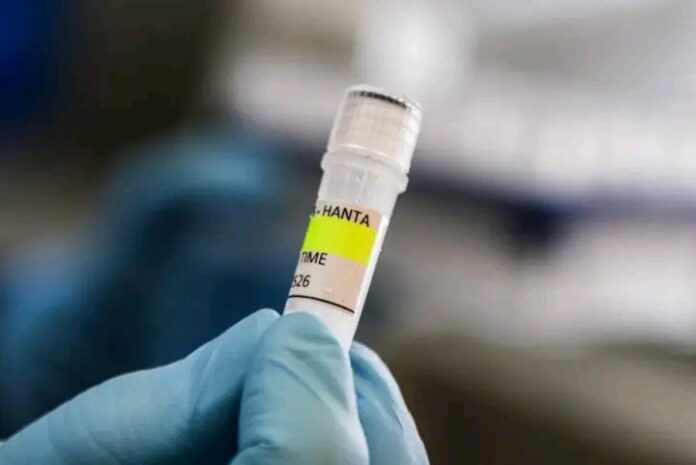

The global health body noted that hantaviruses in the Americas can cause hantavirus cardiopulmonary syndrome, a severe respiratory disease with a fatality rate of up to 50 per cent, adding that the Andes virus, found in South America, is the only known hantavirus with documented cases of limited human-to-human transmission among close contacts.
It further stated that hantaviruses in Europe and Asia are linked to haemorrhagic fever with kidney problems.
According to the WHO, it received a report of a cluster of passengers with severe respiratory illness aboard a cruise ship, MV Hondius, with 147 passengers and crew onboard on May 2, 2026.
The announcement triggered global concern over a hantavirus outbreak linked to the cruise ship, MV Hondius, and an international public health response coordinated by the WHO and the Spanish government.
As of May 8, eight cases, including three deaths, have been reported, with six cases confirmed as hantavirus infection.
In a follow-up statement issued on May 14, the Director-General of the WHO, Tedros Adhanom Ghebreyesus, disclosed that more than 120 passengers from 23 countries safely disembarked from the vessel in Tenerife and were being monitored by public health authorities in their home countries after weeks of quarantine and containment efforts.
Tedros said three deaths were linked to the outbreak and stressed that the operation highlighted the importance of preparedness, surveillance, and international cooperation in responding to infectious disease threats.
The risk assessment was held. The protocols worked. Science and solidarity operate in coordination, as they must, as they can, when we trust each other,” he stated.
While the WHO says the risk of the virus to the global population is low, PUNCH Healthwise earlier reported that the NCDC DG, Dr Jide Idris, says the agency has intensified disease surveillance across the country.
Providing expert insight into the matter, a Professor of Virology and former President of the Nigerian Academy of Science, Oyewale Tomori, said Nigeria remains at risk of hantavirus infection due to its vulnerability to rodent-borne diseases and increasing global interactions, urging authorities to strengthen preparedness rather than panic.
“Let nobody tell you we are not at risk. We are. And all we need to do is not to panic, but to prepare. And by preparation, I mean providing the diagnostic reagents for the labs that we have set up. So that in case, at least the NCDC lab in Abuja should have the diagnostic reagents for hantavirus,” the don stated.
He stated that although the virus is not currently causing a major outbreak in Nigeria, evidence suggests that hantavirus already exists in parts of Africa, including Nigeria.
Tomori explained that hantavirus is a rodent-borne infection spread through exposure to aerosolised urine and faeces of infected rodents.
He further stated that the symptoms initially resemble common illnesses such as malaria, including fever, headache, joint pain, and general body weakness, before progressing into severe lung or kidney complications.
He explained that one strain affects the lungs and can lead to breathing difficulties and death, while another affects the kidneys and causes renal syndrome.
The professor noted that the pulmonary type is more common in America and Europe, while the kidney-related form is prevalent in parts of Asia.
The don noted that antibodies to the virus had previously been detected in Nigerians, adding that cases had also been documented in countries such as Senegal, Guinea, Egypt, Djibouti, and South Africa.
He noted that the disease is often overlooked because health authorities are not actively testing for it.
“Don’t let anybody tell you that there’s no hantavirus in Africa. There are paper publications in Guinea, Egypt, Djibouti, all those areas. Even in Nigeria, we have found antibodies to the virus. But we are not studying for it at all, so we are not finding it,” he said.
Tomori warned that Nigeria’s disease surveillance system remains weak because laboratories are not equipped with the right diagnostic reagents.
“In a sensible system, we should already be getting the reagents for hantavirus diagnosis, at least in one of the labs we have in the country, so if anything happens, we are prepared ahead of time,” he said.
The virologist also raised concerns about Nigeria’s outbreak preparedness and surveillance systems, warning that the country often reacts only after diseases become widespread.
Tomori added that although COVID-19 laboratories established during the pandemic could still be useful, they would remain ineffective without hantavirus-specific consumables and reagents.
“The techniques and methodology are the same. It just needs the right reagent. If you don’t give them the right reagent, they cannot even be of use to anybody,” he said.
Tomori clarified that although the disease transmission is low and not easily spread from person to person like that of COVID, people who clean rodent-infested areas, close relatives of infected persons, doctors and health workers who fail to observe infection prevention and control measures, are at risk.
The virologist further advised Nigerians to avoid contact with rodents and take precautions while cleaning dusty areas containing rodent droppings.
Also speaking, a Professor of Medical Virology at the University of Maiduguri, Borno State, Marycelin Baba, said Nigeria cannot confidently claim the virus is absent because surveillance and testing remain inadequate.
“You cannot say a disease does not exist if you are not looking for it,” she said.
The professor stated that although the country possesses laboratories with PCR testing capability, the absence of specific reagents and primers required to detect hantavirus could hinder early identification of cases if the virus emerges in Nigeria.
The medical virologist warned that many Nigerians with respiratory symptoms may not receive accurate diagnoses because the country lacks hantavirus-specific testing materials.
“The only way you can differentiate whether it is hantavirus, COVID-19 or another respiratory infection is through laboratory testing,” she explained.
Baba asserted that the country should begin preparing for possible cases rather than waiting for an outbreak to occur, and urged the government to immediately begin surveillance and stock strategic laboratories with the necessary consumables and primers for detection.
“We don’t need to wait for the outbreak to hit us before we prepare for it. There is a need to prepare. As long as a disease causes mortality, there is a need to prepare,” she said.
She identified cleaners, farmers, hunters, aircraft cabin cleaners and people working in dusty or poorly ventilated environments as groups at increased risk of exposure because they are more likely to inhale aerosolised rodent droppings.
Baba advised Nigerians to adopt preventive measures similar to those used during the COVID-19 pandemic, including wearing face masks, avoiding crowded places, and maintaining hygiene in rodent-infested environments.
On his part, a Professor of Public Health and Epidemiology at the University of Lagos, Adebayo Onajole, said Nigeria’s vulnerability to hantavirus is linked to environmental sanitation challenges and increased movement of people and goods across borders.
“If there is an outbreak, I think Nigeria is ready to some extent, but there are still challenges,” he said.
The epidemiologist explained that proper environmental sanitation and rodent control were important to reducing rodent infestation and preventing the spread of the virus.
“For the environmental aspect, we try to encourage environmental sanitation because it will reduce the spread of rodents. So, taking care of breeding spaces for rats and mice and protecting food substances are very important preventive measures,” he stated.
Onajole stated that every country was vulnerable to hantavirus outbreaks, calling for improvement in Nigeria’s Integrated Disease Surveillance and Response system to enable faster detection and reporting of unusual illnesses.
“The first and foremost is that we need to increase our IDSR. That is the Integrated Disease Surveillance and Response System.”
“The second thing is the upgrade of our laboratory system. To be able to make a diagnosis if and when you have this case occurring,” he said.
Onajole added that health workers must maintain a high index of suspicion because many viral illnesses initially present with flu-like symptoms such as fever, headache and body pain.
He stated that farmers and others who frequently come in contact with rodents were at higher risk of infection and should be educated on preventive measures to protect themselves.
Janet Ogundepo